Resumen:
Crystal plasticity (CP) are well-established models, used, e.g., in scale-bridging applications to obtain
microstructure-sensitive mechanical response of polycrystalline materials. These models require a proper
consideration of the single crystal deformation mechanisms, a representative description of the microstructure, and
an appropriate scheme to connect the microstates with the macroscopic response. FFT-based methods, originally
proposed by Moulinec and Suquet for composites and extended to polycrystals (our most recent formulation,
including non-local large-strain elasto-viscoplasticity) are attractive due to their higher efficiency compared with
CP-Finite Elements, and their direct use of voxelized microstructural images. In this talk, we will report recent
progress on FFT-based polycrystal plasticity, with emphasis in novel implementations, including strain-gradient
plasticity, achieving geometric accuracy working with voxelized images, non-periodic extensions, and dynamic
effects. We will show applications of these methods to: micromechanics of nano-metallic laminates, wave
propagation in heterogeneous materials, multiscale coupling with Lagrangian hydrocodes, integration with 3-D
characterization methods, and use for training and validation of machine-learning methods.
Bibliografía:
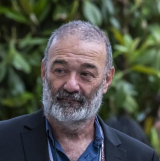
Ricardo Lebensohn received his PhD in Physics from the Universidad Nacional de Rosario (Argentina) in 1993. He is currently a Senior Scientist in the Theoretical Division, Fluid Dynamics and Solid Mechanics Group at Los Alamos National Laboratory. His research focuses on structure–property relationships in materials and the development of computational models for crystalline materials, particularly crystal plasticity modelling.
He is well known for his contributions to the viscoplastic self-consistent (VPSC) formulation and for the development of Fast Fourier Transform (FFT)-based methods to predict micromechanical fields in polycrystalline materials. Dr. Lebensohn has authored more than 200 peer-reviewed journal publications, which have received over 18,000 citations. His distinctions include the Humboldt Research Award for Senior US Scientists (2010), the National Nuclear Security Administration Defense Programs Award of Excellence (2011), the TMS Structural Materials Division Distinguished Scientist/Engineer Award (2019), and his appointment as Laboratory Fellow at Los Alamos National Laboratory in 2022.